How I Found Balance Through Traditional Chinese Wellness
For years, I chased quick fixes—energy drinks, strict diets, endless workouts—only to feel more drained. Then I discovered traditional Chinese medicine (TCM) adjustment, not as a cure, but as a way to reset my body’s rhythm. It wasn’t magic, but a gradual shift: better sleep, steady energy, and less stress. This is my journey into TCM-inspired wellness, focusing on balance, not perfection. If you’re tired of burnout and seeking lasting vitality, this approach might just change how you think about health.
The Burnout Breakdown: Why Modern Life Throws Us Off Balance
In today’s fast-paced world, many women in their 30s, 40s, and 50s find themselves running on empty. Responsibilities pile up—managing households, supporting children, caring for aging parents, and often maintaining careers—all while trying to stay healthy and emotionally grounded. The result? A quiet but persistent erosion of well-being. Common signs include chronic fatigue that coffee can’t fix, sleep that feels restless or incomplete, and mood swings that seem to come out of nowhere. These aren’t just personal failures or signs of aging; they are signals that the body is out of balance.
From the perspective of traditional Chinese medicine, this imbalance often stems from disrupted Qi, the vital energy that flows through the body along pathways known as meridians. When Qi moves smoothly, the body functions optimally. But when stress, poor diet, or irregular routines interfere, Qi can become stagnant or depleted. This stagnation is often linked to emotional tension, digestive discomfort, and a weakened immune response. Similarly, the foundational TCM concept of Yin and Yang—opposing but complementary forces—must remain in dynamic equilibrium. Modern life tends to overstimulate Yang energy (activity, heat, outward focus) while depleting Yin (rest, coolness, inward nourishment), leading to a state of internal conflict that manifests as physical and emotional fatigue.
Chronic stress plays a major role in this disruption. Unlike acute stress, which the body can recover from, chronic stress keeps the nervous system in a prolonged state of alert. In Western terms, this means elevated cortisol levels, increased heart rate, and suppressed digestion. In TCM, this is seen as Liver Qi stagnation—a condition where emotional stress blocks the smooth flow of energy, often leading to irritability, headaches, and digestive issues. The key insight is that these symptoms are not isolated problems but interconnected expressions of a deeper imbalance. Addressing them requires more than symptom management; it calls for a return to rhythm, nourishment, and mindful living.
What TCM Adjustment Really Means (And What It Doesn’t)
Traditional Chinese medicine adjustment is often misunderstood. It is not a quick cure for illness, nor is it a replacement for modern medical care. Instead, it is a holistic approach focused on restoring harmony within the body’s systems. The goal is not to eliminate symptoms through suppression, but to support the body’s natural ability to regulate itself. This philosophy places strong emphasis on prevention—maintaining balance before illness arises—rather than waiting for disease to appear before taking action. In this way, TCM functions as a form of ongoing wellness maintenance, much like regular exercise or dental hygiene.
At the heart of TCM lies the concept of Qi, the animating force that sustains life. Qi flows through organ systems, but unlike Western anatomy, these organs are viewed as functional networks rather than just physical structures. For example, the TCM “Spleen” is responsible not only for digestion but also for transforming food into usable energy and maintaining muscle strength. When the Spleen Qi is weak, a person may feel sluggish, struggle with bloating, or have difficulty concentrating. Similarly, the “Kidneys” in TCM govern not only urinary function but also vitality, bone health, and the body’s fundamental reserves. Strengthening the Kidneys is often a focus for those experiencing fatigue, low back discomfort, or diminished resilience.
Another core principle is the interdependence of body, mind, and environment. Emotions are seen as having direct effects on organ function—excessive worry affects the Spleen, anger impacts the Liver, and fear influences the Kidneys. This does not mean emotions are dangerous; rather, it highlights the importance of emotional awareness and regulation. When emotions are prolonged or unexpressed, they can contribute to energetic blockages. TCM adjustment seeks to clear these blockages through gentle, supportive methods such as dietary guidance, movement, and lifestyle alignment. It is not about dramatic interventions, but about creating conditions in which the body can heal itself over time.
It’s also important to clarify what TCM adjustment is not. It is not a substitute for medical diagnosis or treatment. If someone is managing a chronic condition such as diabetes, hypertension, or autoimmune disease, TCM can be a complementary approach, but it should never replace prescribed care. Additionally, results are typically gradual. Unlike pharmaceuticals that may offer rapid symptom relief, TCM works by supporting long-term resilience. Progress is often subtle—better sleep, improved digestion, a calmer mind—rather than dramatic. This requires patience and consistency, but the rewards are lasting and deeply integrated into daily life.
My First Steps: Simple Daily Shifts That Made a Difference
My journey into TCM-inspired wellness began not with a crisis, but with quiet desperation. I was sleeping poorly, waking up tired despite eight hours in bed. My energy would spike in the morning and crash by mid-afternoon. I relied on snacks and caffeine to keep going, only to feel bloated and irritable by evening. I knew I needed a change, but I didn’t want another rigid diet or exhausting workout plan. What I found instead was simplicity: small, sustainable shifts rooted in TCM principles.
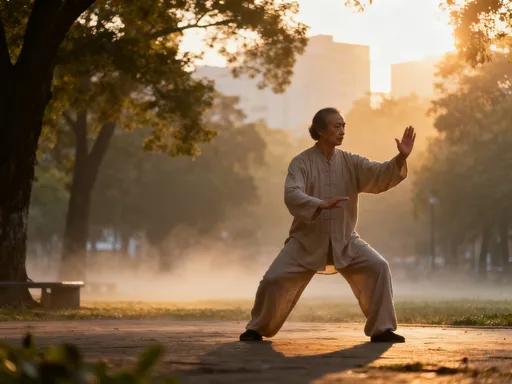
The first change was introducing morning Qi Gong into my routine. I started with just ten minutes a day—gentle movements, deep breathing, and focused intention. At first, it felt awkward, even a little silly. But within a few weeks, I noticed a shift. My mind felt clearer, my body more grounded. Qi Gong, like Tai Chi, is designed to cultivate and circulate Qi through slow, deliberate motions. It doesn’t build muscle or burn calories in the way conventional exercise does, but it supports the nervous system, reduces stress, and enhances body awareness. Over time, those ten minutes expanded into a cherished part of my day, a moment of stillness before the household woke up.
Dietary changes followed, guided by TCM’s emphasis on warmth and digestion. I began to reduce raw foods—salads, smoothies, cold drinks—especially in the morning and during cooler months. In TCM, the Spleen is sensitive to cold, and consuming too many raw or chilled foods can weaken its ability to transform food into energy. Instead, I shifted toward warm, cooked meals: oatmeal with cinnamon, congee with ginger, soups with root vegetables. I also started eating more in season—root vegetables and warming spices in winter, lighter greens and cooling foods in summer. This didn’t mean giving up favorite foods entirely, but rather aligning my choices with my body’s needs and the natural environment.
The effects were gradual but unmistakable. My digestion improved—less bloating, more regular elimination. I felt more stable throughout the day, without the sharp energy crashes. Emotionally, I felt less reactive. I still had stressful moments, but I could return to calm more quickly. These changes weren’t the result of willpower or deprivation; they came from listening to my body and making choices that supported its natural rhythms. That shift—from fighting my body to working with it—was the real turning point.
Body Clock Wisdom: Aligning Routine with Natural Rhythms
One of the most eye-opening aspects of TCM is the concept of the organ clock—a 24-hour cycle that maps the body’s energy flow through different organ systems. Each two-hour window is associated with a specific organ’s peak activity, offering practical guidance on when to eat, rest, and engage in certain activities. While this may sound abstract, applying it to daily life can have tangible benefits.
For example, the Liver is most active between 1 a.m. and 3 a.m. In TCM, the Liver is responsible for smoothing the flow of Qi and blood, as well as regulating emotions. If someone consistently wakes during this time, it may indicate Liver Qi stagnation, often linked to stress or unresolved emotions. Supporting the Liver means prioritizing rest before midnight, when the body begins its regenerative phase. The Gallbladder, active from 11 p.m. to 1 a.m., governs decision-making and courage. Disruptions during this time can lead to indecision or anxiety. Going to bed early—ideally by 10:30 p.m.—supports both organs and promotes deeper, more restorative sleep.
Similarly, the digestive organs have their peak times. The Stomach is most active between 7 a.m. and 9 a.m., making this the ideal window for breakfast. Eating a warm, substantial meal during this time supports Spleen Qi and provides sustained energy. The Spleen, active from 9 a.m. to 11 a.m., is responsible for transforming food into usable energy. This is a good time for focused work, as mental clarity is naturally higher. Lunch, ideally eaten between 11 a.m. and 1 p.m., aligns with the Heart’s peak time, which governs circulation and mental focus. A balanced midday meal supports both physical and cognitive function.
Evening hours are for winding down. The Pericardium (responsible for emotional protection) and Triple Burner (which regulates fluid balance and temperature) are active in the evening, preparing the body for rest. This is not the time for intense activity or heavy meals. Instead, gentle movement, light conversation, and warm herbal tea support the body’s transition into rest. While it’s not always possible to follow this rhythm perfectly—family needs, work schedules, and life happen—the goal is awareness. Even small adjustments, like eating breakfast within an hour of waking or avoiding screens after 9 p.m., can help realign the body with its natural cycles.
Herbal Teas & Warming Foods: Nourishing From the Inside
In TCM, food is one of the most powerful tools for maintaining balance. Rather than viewing meals as mere fuel, this tradition sees them as medicine—gentle, daily support for the body’s systems. The emphasis is on warmth, digestibility, and seasonal alignment. Certain ingredients are valued not for their calories or macronutrients, but for their energetic properties. For example, warming foods like ginger, cinnamon, and cooked root vegetables are believed to strengthen Spleen and Stomach Qi, improving digestion and energy production.
Ginger, in particular, is a cornerstone of TCM-inspired wellness. A slice of fresh ginger in hot water first thing in the morning can stimulate digestion and warm the body. It is especially helpful for those who feel cold easily, have slow digestion, or experience morning nausea. Goji berries, known for their sweet taste and bright red color, are considered a Yin-nourishing food that supports the Liver and Kidneys. They can be added to soups, oatmeal, or brewed into tea. Red dates (also called jujubes) are another gentle tonic, often used to harmonize the Spleen and calm the mind. These ingredients are not miracle cures, but consistent use can build resilience over time.
Herbal teas offer another accessible way to support balance. A simple tea made with ginger, goji berries, and red dates can be both soothing and energizing. Chrysanthemum tea, slightly cooling, is often used to clear heat and support the eyes—ideal for those who spend long hours in front of screens. Peppermint tea can help relax the Liver and ease digestive discomfort. The key is to choose teas based on how you feel, not on trends or labels. If you’re feeling cold, fatigued, or bloated, warming herbs are more appropriate. If you’re feeling irritable, overheated, or restless, cooling herbs may be more supportive.
Listening to your body’s signals is essential. TCM teaches that cravings, temperature preferences, and digestion are all forms of communication. For instance, a strong desire for warm soup on a cold day is not just habit—it may be your body asking for nourishment. Similarly, feeling sluggish after a large salad could indicate that raw foods are taxing your digestive system. By paying attention to these cues, you can make food choices that are both satisfying and supportive. This is not about rigid rules, but about developing a relationship with your body that honors its needs.
Beyond Acupuncture: Accessible TCM-Inspired Practices for Daily Life
While acupuncture is one of the most well-known aspects of TCM, many effective practices can be incorporated at home without special training. Self-massage, or acupressure, is a simple yet powerful tool. By applying gentle pressure to specific points along the meridians, you can help move stagnant Qi, relieve tension, and support organ function. Two of the most commonly used points are Zusanli (ST36) and Neiguan (PC6).
Zusanli, located below the knee, is known as a major point for strengthening Qi and boosting overall vitality. It is often used to support digestion, reduce fatigue, and enhance immunity. To locate it, place four fingers below the kneecap, just to the outside of the shinbone. Applying firm but gentle pressure for one to two minutes on each leg can be done daily, especially when feeling low in energy. Neiguan, found on the inner forearm, is widely used for calming the mind, relieving nausea, and reducing chest tightness. It is particularly helpful during times of stress or emotional upset. To find it, measure three finger-widths from the wrist crease, between the two tendons. Massaging this point for a few minutes can promote relaxation and emotional balance.
In addition to acupressure, gentle movement practices play a vital role. Tai Chi and Qi Gong are not only forms of exercise but also moving meditations that cultivate awareness and energy flow. Even simple stretching, done mindfully and with deep breathing, can release tension and improve circulation. The emphasis is not on intensity or speed, but on rhythm, coordination, and presence. These practices help shift the body from a state of stress (fight-or-flight) to one of rest and repair (rest-and-digest), supporting long-term well-being.
Consistency is more important than duration. Five minutes of mindful breathing, ten minutes of gentle stretching, or a short walk after dinner can have cumulative benefits. The goal is not to add more to an already full schedule, but to weave small moments of care into the existing rhythm of the day. Over time, these practices become not chores, but anchors—ways to reconnect with yourself amidst the demands of daily life.
Putting It All Together: Building a Sustainable Wellness Routine
Integrating TCM-inspired wellness into daily life is not about adopting every practice at once, but about finding what works for you. The beauty of this approach lies in its flexibility and personalization. Some women may find that morning Qi Gong and warm breakfasts make the biggest difference. Others may benefit more from evening acupressure and herbal tea. The key is to start small, observe the effects, and build gradually.
A balanced routine might include waking with the sun or shortly after, starting the day with warm water or ginger tea, eating a cooked breakfast by 9 a.m., and taking a short walk after meals to support digestion. Midday can be reserved for focused work, while late afternoon is a good time for gentle stretching or deep breathing. Dinner should be eaten early, ideally by 7 p.m., and be light and easy to digest. Evening hours are for connection, relaxation, and preparation for rest. Going to bed by 10:30 p.m. supports the body’s natural regeneration cycle.
But more than any specific schedule, the core principle is awareness. TCM encourages listening to the body’s signals—fatigue, hunger, temperature, mood—and responding with care. This is not about perfection, but about presence. Some days will be more balanced than others, and that’s okay. The goal is not to eliminate stress or achieve constant energy, but to build resilience—the ability to recover, adapt, and thrive over time.
Professional guidance can be valuable, especially when navigating specific health concerns. Consulting a licensed TCM practitioner can provide personalized recommendations, whether for dietary adjustments, herbal support, or acupuncture. These practitioners are trained to assess individual patterns of imbalance and offer tailored solutions. While self-care is powerful, it is not a substitute for expert care when needed.
True wellness is not found in extremes, but in harmony. Traditional Chinese medicine adjustment taught me to listen, respond, and live with greater awareness. By aligning with natural cycles and supporting my body gently, I’ve gained energy, calm, and resilience. This isn’t a quick fix—it’s a lifelong practice. And if you’re ready to move beyond exhaustion and embrace a more balanced way of living, this path is worth exploring. Always consult a qualified practitioner to support your journey safely.